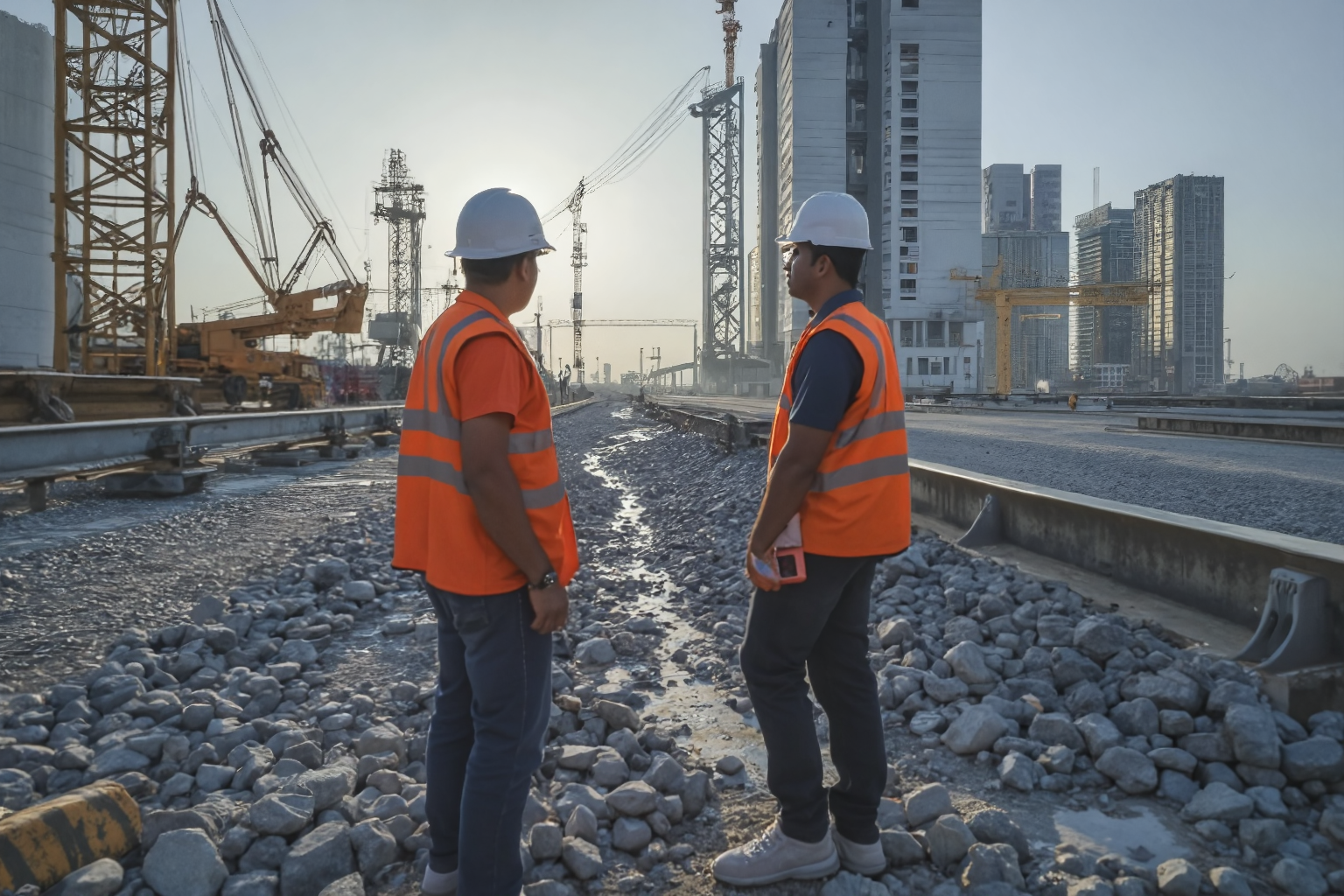
Charting the Rise of Filipino Engineers in Global Construction Leadership
Key Takeaways
Building Bridges: The Rise of Filipino Engineers in Global Construction
In This Article
Introduction
Key Takeaways
Filipino engineers ascend from site supervision to project leadership. Education, experience, and adaptability fuel their climb. Innovation, particularly Building Information Modeling, gives them a competitive edge. Case studies reveal their engineering excellence. Their impact resonates globally, shaping the future of construction.
Exploring Filipino Engineers’ Global Impact
Filipino engineers build bridges, literally and figuratively, in global construction.
Building Bridges: The Rise of Filipino Engineers in Global Construction
From skyscrapers piercing the clouds of Dubai to intricate high-speed rail networks connecting bustling cities across Southeast Asia, Filipino engineers are increasingly at the helm of major infrastructure projects that are reshaping the global construction landscape. Their journey, marked by technical prowess, adaptability, a collaborative spirit, and a deep understanding of global best practices, is transforming the industry and setting new standards for project delivery. This article delves into the evolving role of Filipino engineers, tracing their career trajectory from on-site supervision to project leadership and examining the factors driving their success in key markets like the Middle East and Asia.
Still, the rise of Filipino engineers is not merely a statistical trend; it represents a significant shift in the global construction talent pool, driven by a unique blend of skills and experience. Their contributions extend beyond technical expertise, encompassing project management, leadership, and the integration of cutting-edge technologies like Building Information Modeling (BIM). For instance, Filipino engineers have been instrumental in the successful completion of iconic projects such as the Burj Khalifa and the Riyadh Metro, showcasing their ability to manage complex projects within demanding timelines and budgets.
Here’s the thing: their proficiency in BIM and other digital construction tools has further enhanced their value in the global market, allowing them to optimize project workflows and improve collaboration among stakeholders. Furthermore, their adaptability to diverse cultural environments and their commitment to continuous professional development have positioned them as highly sought-after professionals. The increasing demand for Filipino engineers in leadership roles reflects the growing recognition of their capabilities in driving successful project outcomes. The educational background, international experience, and leadership skills that have propelled Filipino engineers to the forefront of the global construction industry, examining their impact on project efficiency, cost management, and safety. We will also analyze the role of professional organizations and mentorship programs in fostering the next generation of Filipino engineering leaders and discuss the future prospects for these professionals in the rapidly evolving global construction market.
From Site Supervision to Project Leadership: A Transforming Trajectory
Historically, Filipino engineers gained a foothold in international construction through on-site roles, primarily in the Middle East and increasingly across Asia. Their renowned strong work ethic and technical skills, honed in demanding environments, quickly earned them recognition and respect within the industry. This initial wave of Filipino talent often focused on technical execution and site supervision, forming the backbone of many large-scale infrastructure projects, from iconic skyscrapers in Dubai and Doha to complex transportation networks across Southeast Asia.
These experiences provided invaluable practical knowledge and a deep understanding of construction processes, laying the groundwork for future leadership roles. However, a new generation of Filipino engineers is emerging, equipped with advanced degrees from prestigious international universities, diverse global experience, and a mastery of cutting-edge technologies like Building Information Modeling (BIM) and digital project management. This has paved the way for their transition into leadership positions, overseeing complex projects and driving innovation within the global construction market.
This shift is evident in the increasing number of Filipino professionals holding project management, engineering management, and director-level positions in major international firms. Furthermore, professional organizations dedicated to Filipino engineers in the diaspora, such as the Philippine Institute of Civil Engineers (PICE) chapters across the Middle East and Asia, have played a crucial role in fostering career development and networking opportunities, facilitating the sharing of best practices, and promoting leadership skills among their members. The rise of Filipino engineers to leadership roles isn’t solely due to technical proficiency.
Their adaptability to diverse cultural environments, combined with strong communication and interpersonal skills, makes them highly effective team leaders and project managers. They excel at building consensus, navigating complex stakeholder relationships, and fostering collaborative work environments, essential qualities for successful project delivery in international settings. This emphasis on soft skills, coupled with their technical expertise, distinguishes them in the competitive global construction landscape. The increasing demand for BIM and digital construction expertise has further propelled Filipino engineers into leadership roles.
Their proficiency in these technologies allows for more efficient project planning, cost control, and risk management, aligning perfectly with the industry’s growing focus on data-driven decision-making. Moreover, Filipino engineers are actively involved in shaping the future of digital construction by contributing to the development and implementation of new technologies and workflows, solidifying their position as innovators and thought leaders in the field. This commitment to continuous learning and technological advancement ensures their continued relevance and leadership within the ever-evolving construction industry.
Driving Forces: Education, Experience, and Adaptability
Several factors contribute to the rise of Filipino engineers in global construction leadership. A strong emphasis on STEM education, particularly in engineering and related fields, lays a robust groundwork. The Philippines boasts a long-standing tradition of producing highly skilled engineers, with many universities offering specialized programs accredited by international bodies. This focus on quality education ensures Filipino engineers enter the workforce equipped with a solid theoretical understanding of engineering principles, setting the stage for successful careers in the global construction market.
Furthermore, many Filipino engineers pursue international certifications like PMP and chartered engineer status, along with postgraduate studies, enhancing their expertise and global competitiveness. These qualifications not only deepen their technical knowledge but also demonstrate a commitment to professional development, making them highly sought-after professionals in international projects. Their adaptability to diverse cultural environments and proficiency in multiple languages, often including English, Arabic, and Mandarin, also plays a crucial role. This linguistic and cultural fluency enables seamless communication and collaboration across international teams, a critical asset in managing complex infrastructure projects across Asia and the Middle East.
For instance, Filipino engineers working on high-speed rail projects in the Middle East require not only technical expertise but also the cultural sensitivity to navigate diverse stakeholder relationships. The willingness to embrace lifelong learning is another defining characteristic. Filipino engineers actively seek opportunities to upskill, particularly in areas like BIM and digital construction, recognizing the transformative power of technology in modern project management. This commitment to continuous improvement allows them to stay at the forefront of industry advancements and contribute to cutting-edge projects, such as the development of smart cities and sustainable infrastructure. Moreover, the inherent Filipino values of teamwork, resilience, and a strong work ethic contribute significantly to their success in leadership roles. These qualities foster strong team dynamics, enable effective problem-solving, and ensure projects are delivered on time and within budget. This combination of technical proficiency, cultural adaptability, and strong leadership skills positions Filipino engineers for continued success in shaping the future of global construction.
Embracing Innovation: BIM and the Digital Edge
The adoption of digital technologies like Building Information Modeling (BIM) and digital project management has revolutionized the construction industry, pushing it towards a future defined by data-driven decisions and streamlined processes. Filipino engineers, renowned for their technical acumen and adaptability, have readily embraced these advancements, leveraging them to enhance project planning, execution, and overall efficiency. Their proficiency in these technologies has further solidified their position as highly sought-after professionals in the competitive global construction market, particularly across Asia and the Middle East.
From optimizing construction sequencing and clash detection in complex infrastructure projects in Dubai to improving cost control and risk management in high-rise developments across Southeast Asia, Filipino engineers are demonstrating the transformative power of digital construction. The ability to visualize projects in 3D through BIM, coupled with sophisticated project management software, allows for more accurate estimations, better resource allocation, and improved collaboration among stakeholders. This digital fluency is particularly valuable in large-scale infrastructure projects common in the Middle East and Asia, where managing complex logistics and coordinating diverse teams are paramount.
Furthermore, the embrace of digital tools by Filipino engineers is not merely reactive; they are actively shaping the future of construction through innovation. Many Filipino professionals are pursuing advanced certifications and specializations in areas like BIM management and digital twin technology, positioning themselves at the forefront of the industry’s digital transformation. This proactive approach to professional development is a key driver of their career progression, opening doors to leadership roles and increasing their influence within global construction firms.
The rise of digital construction also presents significant opportunities for Filipino engineers to contribute to more sustainable and resilient infrastructure. By leveraging BIM for energy analysis and material optimization, they can contribute to greener building practices and help mitigate the environmental impact of large-scale construction projects. This focus on sustainability aligns with the growing global emphasis on environmentally responsible development and further enhances the value proposition of Filipino engineers in the international market. Their integration of technology, combined with a strong work ethic and collaborative spirit, positions them as key players in shaping a more efficient, sustainable, and technologically advanced future for the construction industry in Asia, the Middle East, and beyond.
Leading the Way: Case Studies of Filipino Engineering Excellence
Numerous Filipino engineers are spearheading large-scale infrastructure projects across Asia and the Middle East, demonstrating exceptional leadership in the global construction market. Their contributions are reshaping skylines and improving connectivity across these dynamic regions. For instance, Engr. Maria Santos, a seasoned civil engineer with over two decades of experience, led the complex construction of a major transportation hub in Dubai. Leveraging BIM and digital construction management tools, Engr. Santos navigated tight deadlines and logistical complexities, delivering the project on time and within budget.
Her team’s meticulous planning and emphasis on safety set new benchmarks for similar projects in the region, solidifying the reputation of Filipino engineers for excellence in project leadership. Her career progression exemplifies the growing influence of Filipino professionals in international construction management. Another compelling example is Engr. David Reyes, a structural engineer specializing in high-rise construction. Engr. Reyes played a pivotal role in the design and construction of several iconic skyscrapers in Kuala Lumpur, Malaysia.
His expertise in seismic engineering and innovative use of construction materials proved crucial in overcoming the unique challenges posed by the region’s geological conditions. Engr. Reyes’s leadership in integrating BIM into the project workflow significantly enhanced collaboration and streamlined communication among diverse teams, resulting in improved project efficiency and reduced construction time. His work highlights the growing demand for Filipino engineers with advanced technical skills and expertise in digital construction. The success stories of Filipino engineers like Engr.
Santos and Engr. Reyes are not isolated incidents. They represent a broader trend of Filipino professionals taking on leadership roles in complex infrastructure projects across Asia and the Middle East. Their strong educational foundation, coupled with practical experience and adaptability, makes them highly sought-after in the global construction industry. Furthermore, their proficiency in cutting-edge technologies like BIM and digital project management positions them at the forefront of innovation in the field. These professionals are not only contributing to the development of critical infrastructure but also paving the way for future generations of Filipino engineers to excel in global construction leadership.
The rise of Filipino engineers in these regions is also fueled by the increasing demand for sustainable and resilient infrastructure. Filipino engineers are well-equipped to address these challenges, bringing their expertise in innovative design and construction techniques to projects focused on environmental sustainability and disaster preparedness. This commitment to sustainability aligns with the growing global emphasis on responsible construction practices and further strengthens the position of Filipino engineers as leaders in the industry. Moreover, the collaborative and adaptable nature of Filipino engineers allows them to effectively navigate the cultural nuances of working in international settings. Their ability to build strong relationships with stakeholders from diverse backgrounds contributes to successful project outcomes and fosters a positive work environment. This emphasis on teamwork and communication is a hallmark of Filipino leadership in construction management and further underscores their value in the global construction market.
Impact and Influence: Filipino Leadership in Action
The demonstrably positive impact of Filipino engineers’ leadership on project outcomes is reshaping the global construction landscape, particularly across Asia and the Middle East. Their meticulous planning, rooted in a deep understanding of engineering principles and best practices, translates to cost-effective and efficient project delivery. For instance, in the construction of a major transportation hub in the Middle East, a Filipino project leader implemented a BIM-driven process that optimized material usage and reduced construction waste by 15%, resulting in significant cost savings.
Their attention to detail, honed through rigorous training and experience, minimizes errors and rework, further enhancing efficiency. Moreover, their emphasis on safety, often exceeding international standards, creates a secure work environment and protects valuable human resources. This commitment to safety is not merely a procedural requirement but a cultural value deeply ingrained in Filipino work ethics, contributing to a positive project culture and minimizing costly delays due to incidents. The collaborative leadership style characteristic of Filipino engineers fosters strong teamwork and effective communication, crucial for complex infrastructure projects.
They excel at creating inclusive environments where diverse teams, often comprising professionals from various nationalities and backgrounds, can effectively collaborate. This inclusive approach leverages the strengths of each team member, promoting innovation and problem-solving. Open communication channels ensure that all stakeholders, from on-site workers to international clients, are kept informed and aligned with project goals. This transparent communication style builds trust and facilitates swift resolution of potential issues, leading to improved project performance and increased stakeholder satisfaction.
For example, in the development of a large-scale residential project in Asia, a Filipino engineering manager implemented a digital platform that centralized project information and facilitated real-time communication between all stakeholders, resulting in a 20% reduction in project completion time. Furthermore, Filipino engineers are adept at navigating the cultural nuances of international projects, particularly in Asia and the Middle East. Their cultural sensitivity and adaptability enable them to build strong relationships with local communities, government agencies, and international partners.
This cross-cultural competence is invaluable in ensuring smooth project execution and fostering long-term collaborations. Their proficiency in utilizing cutting-edge technologies like BIM and digital project management tools further enhances their leadership capabilities. By embracing these technological advancements, they optimize project workflows, improve decision-making, and enhance overall project efficiency. This forward-thinking approach positions them at the forefront of the digital transformation of the construction industry, solidifying their role as key drivers of innovation and progress in the global construction market.
The career progression of Filipino engineers into leadership roles is also facilitated by their continuous pursuit of professional development. Many actively seek international certifications and postgraduate studies, demonstrating a commitment to lifelong learning and a desire to stay ahead of industry trends. This dedication to continuous improvement equips them with the advanced knowledge and skills necessary to tackle complex engineering challenges and lead large-scale projects. Their growing influence in global construction management is not only a testament to their individual capabilities but also a reflection of the robust engineering education system in the Philippines, which produces highly skilled and globally competitive professionals.
As the demand for experienced and technologically adept construction leaders continues to rise, Filipino engineers are well-positioned to play an increasingly prominent role in shaping the future of the built environment worldwide. Finally, the impact of Filipino engineers extends beyond individual projects. Their leadership is contributing to the development of sustainable infrastructure and resilient communities in Asia, the Middle East, and beyond. By prioritizing sustainable practices and incorporating innovative technologies, they are building projects that not only meet the needs of the present but also consider the well-being of future generations. Their commitment to excellence and their dedication to shaping a better future for the built environment make them invaluable assets in the global construction industry.
Shaping the Future: The Continuing Influence of Filipino Engineers
Filipino engineers are reshaping global construction, their rise fueled by talent, hard work, and adaptability. From on-site roles to project leadership, their trajectory reflects technical skill and a commitment to excellence. Embracing digital technologies like Building Information Modeling (BIM) and honing leadership skills through training and experience, they are set to significantly influence the built environment’s future.
Their impact transcends project completion. Redefining industry standards, they inspire engineers worldwide, particularly within the Filipino diaspora. This influence is evident in Asia and the Middle East’s infrastructure projects. Their expertise in construction management and project leadership is in demand, thanks to their ability to navigate complex logistical challenges and cultural nuances. In Southeast Asia’s major transportation projects, Filipino engineers manage construction and implement advanced BIM workflows, enhancing efficiency and accuracy.
Proficiency in digital tools, combined with a strong work ethic, makes them valuable in the global construction market. Their ability to foster collaborative environments, a trait rooted in their cultural background, ensures smooth communication and strong teamwork crucial for large-scale projects. Career progression for Filipino engineers often involves continuous learning. Pursuing international certifications and postgraduate studies in construction management and advanced engineering, they enhance their global competitiveness.
This dedication to lifelong learning, coupled with practical experience, creates a unique blend of theoretical knowledge and hands-on expertise. Adaptability to diverse work environments, from Asia’s bustling cities to the Middle East’s challenging landscapes, is key to their success. Integrating seamlessly into multicultural teams and managing projects across different geographical regions highlights their leadership potential and adaptability.
The adoption of digital technologies like BIM and digital project management tools is another area where Filipino engineers excel. Their proficiency goes beyond software use; it’s about leveraging these tools to improve project planning, execution, and overall efficiency. This digital acumen contributes to more cost-effective and sustainable project outcomes. In high-profile Middle East infrastructure projects, Filipino engineers have implemented BIM-based workflows to reduce material waste and improve project timelines, showcasing their innovative approach to construction management.
Their impact extends beyond technical skills. Filipino engineers contribute to project execution, leadership, innovation, and cultural understanding. Advancing in their careers, they shape cities’ physical landscapes and inspire future engineers worldwide. Blending technical expertise with strong leadership skills, cultural adaptability, and a commitment to continuous improvement, they drive innovation and progress in global construction. The future of global infrastructure will be influenced by these talented professionals’ continued ascent.